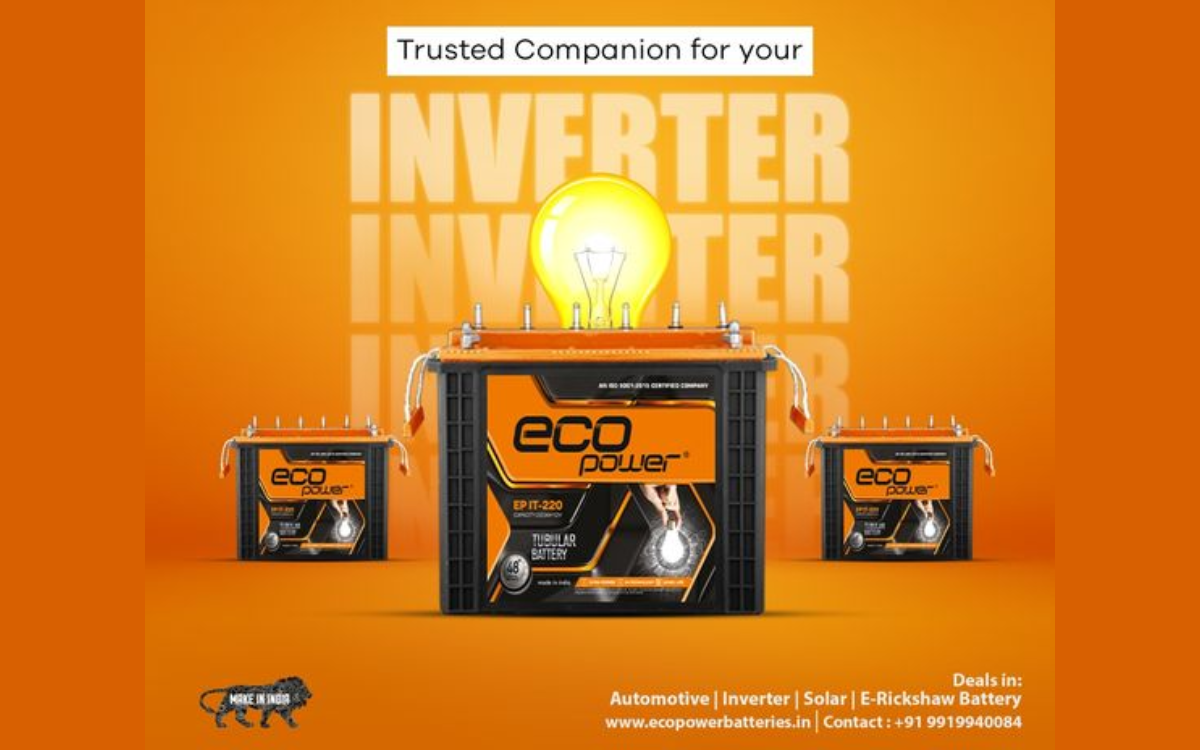
Inverter Batteries vs. Generator: Which Backup Power Solution is Right for You?

When it comes to ensuring uninterrupted power supply during outages or load shedding, choosing the right backup power solution is crucial. In India, where power cuts are not uncommon, the decision between inverter batteries and generators can be a significant one. In this blog, we will explore the advantages and disadvantages of both options to help you make an informed choice.

Inverter Batteries:

As one of the leading battery suppliers and manufacturers in India, Eco Power is at the forefront of providing efficient inverter batteries to meet the diverse needs of consumers. Here are some key points to consider when evaluating inverter batteries:

1.Cost-Efficiency: 

Inverter batteries are generally more cost-effective than generators. They have a lower upfront cost and require less maintenance over time. Battery manufacturers like Eco Power offer a wide range of options to fit different budgets.

2.Environmentally Friendly: 

Inverter batteries are eco-friendly as they do not produce harmful emissions or noise pollution, unlike generators. This makes them a preferred choice for those who are environmentally conscious.

3.Low Noise Levels: 

Inverter batteries operate silently, ensuring a peaceful environment in your home or workplace. This is especially important for businesses that require a quiet setting for their operations.

4.Space-Saving: 

Inverter batteries are compact and can be installed in a small area, making them ideal for homes or businesses with limited space.

5.Ease of Use: 

Inverter batteries are easy to operate and modern models come with advanced features like auto power cut when fully charged and other features, making them user-friendly.

Generators:

While generators have been a traditional backup power source, they come with their own set of advantages and drawbacks:

1.High Power Output: 

Generators can provide a higher power output compared to most inverter batteries, making them suitable for heavy-duty applications in industries or large commercial setups.

2.Continuous Power: 

Generators can run continuously as long as there is a fuel supply. This makes them a reliable choice for long-duration power outages.

3.Quick Start:

Generators start almost instantly when the power goes out, ensuring minimal disruption.

4.Fuel Dependency:

Generators rely on fuel sources like diesel or gasoline, which can be expensive and subject to price fluctuations. Additionally, the noise and emissions from generators can be a concern for both residential and commercial areas.

5.Maintenance & Space: 

Generators require regular maintenance and a dedicated space for installation. Maintenance costs can add up over time, making them a less cost-effective option in the long run.

Which Option is Right for You?

The choice between inverter batteries and generators depends on your specific needs and priorities. Here are some factors to consider:

1.Power Requirements:

If you need high power output for extended periods, a generator might be the better choice. For basic home or office backup needs, inverter batteries are sufficient.

2.Budget: 

Inverter batteries are generally more budget-friendly both in terms of initial cost and long-term maintenance. If cost is a significant concern, they are the way to go.

3.Environmental Concerns:

If you prioritize an eco-friendly solution with minimal noise and emissions, inverter batteries are the clear winner.

4.Space Constraints: 

If you have limited space, inverter batteries are compact and versatile.

5.Ease of Use:

Inverter batteries are user-friendly and require minimal monitoring and maintenance.

In conclusion, both inverter batteries and generators have their merits, and the choice depends on your specific requirements. But considering the fact that generators pollute the environment, it is better to choose a right alternative.As a leading inverter battery manufacturer in India, Eco Power offers a wide range of high-quality inverter batteries designed to meet your backup power needs efficiently and cost-effectively. Ultimately, the right decision will ensure that you have a reliable and sustainable power backup solution in place, giving you peace of mind during power outages.
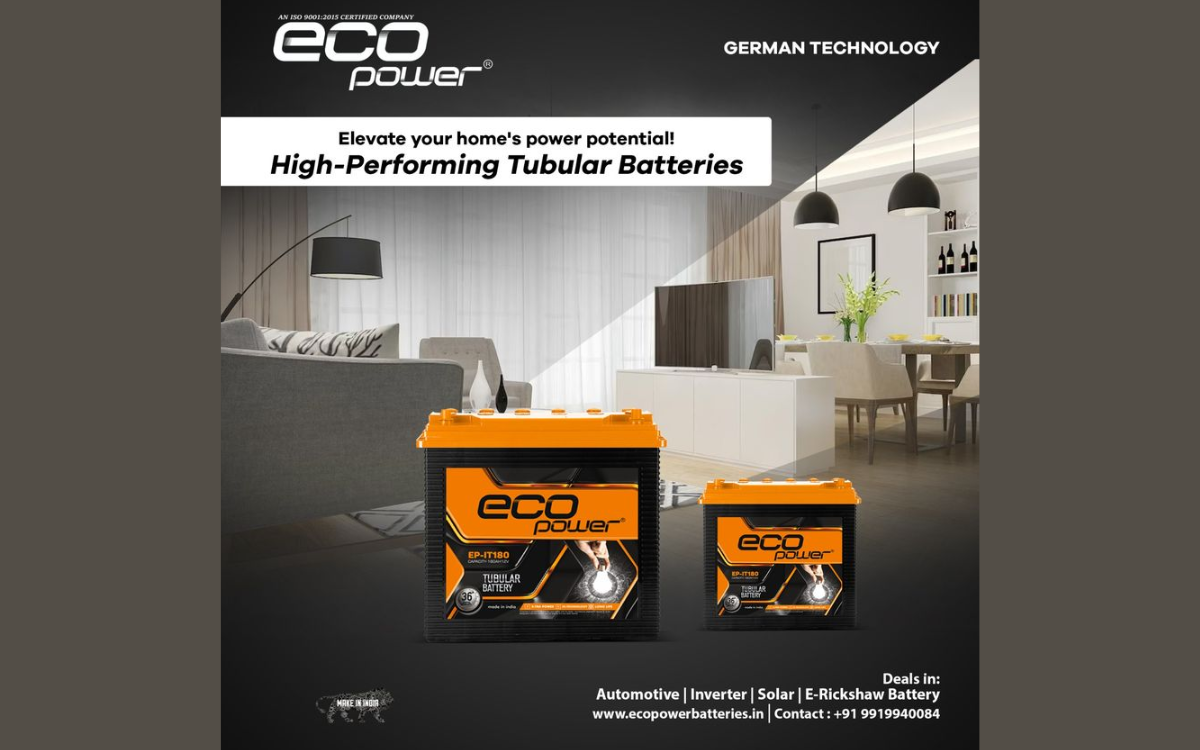
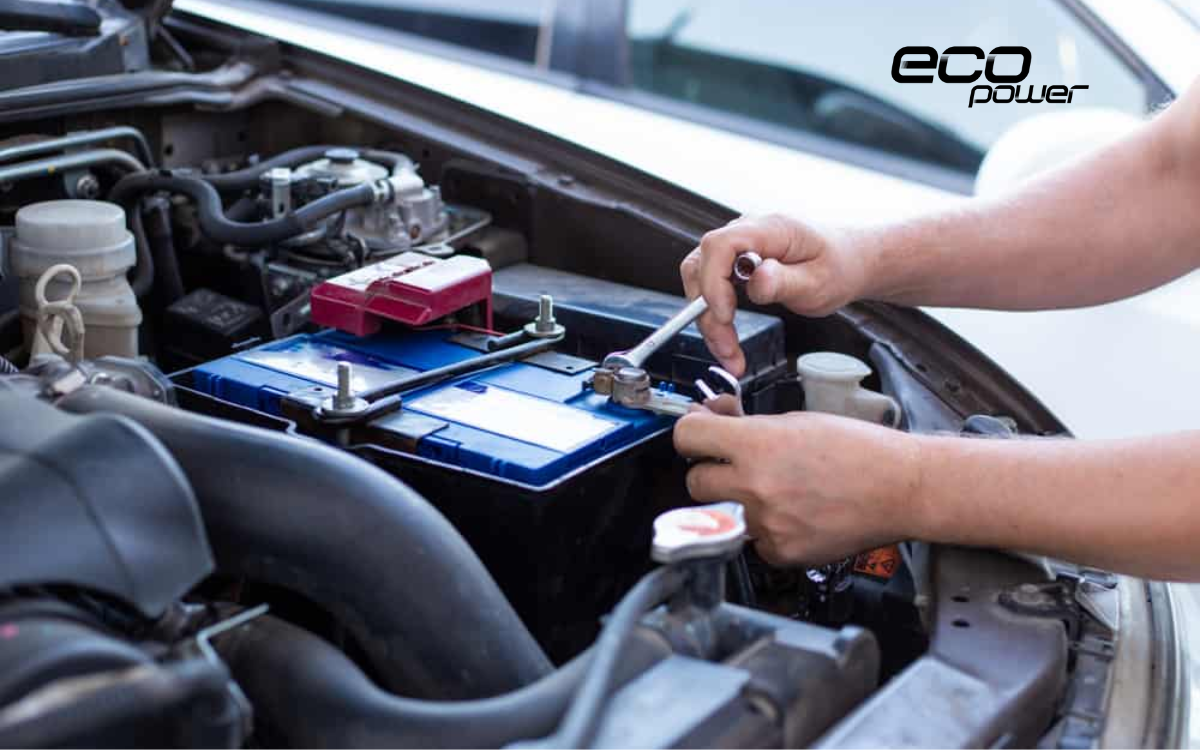
Eco power: Best Inverter Battery for your homes

In the ever-changing landscape of power supply, inverter batteries play a crucial role in ensuring uninterrupted electricity during blackouts. As an informed consumer seeking reliable backup solutions for your home, choosing the right inverter battery becomes paramount. 

While many different types of batteries have come and gone, the market still offers a wide array of options. However, Lead Acid technology remains unchanged and continues to be used as a reliable backup power source for decades.  

In this blog, we will explore why Lead Acid inverter batteries stand out as the best option for home usage.

1.Proven Technology and Reliability

When it comes to inverter batteries, the Lead Acid variant has been the industry’s backbone for decades. Its tried-and-tested technology offers exceptional reliability, making it a go-to choice for homeowners across India. Eco Power, being a leading inverter battery manufacturer in India, capitalizes on this proven technology to deliver robust and consistent performance in their products.

2.Cost-Effectiveness

Battery Manufacturers understand the importance of providing economical solutions to customers. Lead Acid batteries offer a cost-effective option compared to other battery technologies like lithium-ion. These batteries are more budget-friendly, making them an ideal choice for home users seeking quality performance without breaking the bank.

3.Suitable for Varied Power Needs

Lead Acid inverter batteries are available in various capacities to suit different power requirements. Whether you live in a small apartment or a large house, Lead Acid batteries can be tailored to meet your specific energy needs, ensuring you have ample backup power during extended power outages.

4.High Charge Efficiency

One of the key advantages of Lead Acid batteries lies in their high charge efficiency. They can efficiently store power during the charging process and release it steadily when needed. This efficiency ensures that less energy is wasted during the charging and discharging cycles, making Lead Acid batteries an energy-efficient choice for eco-conscious homeowners.

5.Low Maintenance Requirements

Upgraded versions of Lead Acid batteries are designed for minimal maintenance. With periodic checks and basic care, these batteries can deliver consistent performance over an extended period. This low-maintenance feature is especially appealing to homeowners who prefer hassle-free solutions that don’t require constant attention.

In conclusion, Lead Acid inverter batteries are the best choice for homes due to their proven reliability, cost-effectiveness, suitability for varying power needs, high charge efficiency and low maintenance requirements. Eco Power, a leading inverter battery manufacturer in India, uses this tried-and-tested technology to offer robust and consistent performance to eco-conscious homeowners. So, call today and opt a high performing battery from Eco Power today!

Signs Your Car Battery is Dying!

As a car owner, nothing is more frustrating than experiencing unexpected breakdowns and inconveniences on the road due to a dying car battery. That’s why Eco Power, as a renowned car battery manufacturer in India, is here to be your trusted guide.

In this comprehensive guide, we bring you all the essential information to help you recognize the warning signs of a dying car battery and take timely action. So, these are the signs that tells you need to go for a new car battery:

1.Dimming Headlights and Interior Lights:

If you start noticing your car’s headlights and interior lights becoming dimmer, especially when your car is idle or during startup, it’s an early indication that your car battery is on the verge of dying. This drop in brightness is a clear sign that your battery is struggling to supply enough power. Don’t wait for a complete breakdown; reach out to Eco Power, a reliable car battery manufacturer in India, for a dependable replacement. 

2.Slow Engine Crank:

When you turn the ignition key and your engine cranks slowly or takes longer to start, it’s a clear indication for a weakening car battery. A healthy battery delivers the necessary power to start the engine quickly, but a dying battery fails to do so efficiently. It is recommended to get your battery tested and replaced if needed to ensure smooth engine performance.

3.Frequent Jump-Starting:

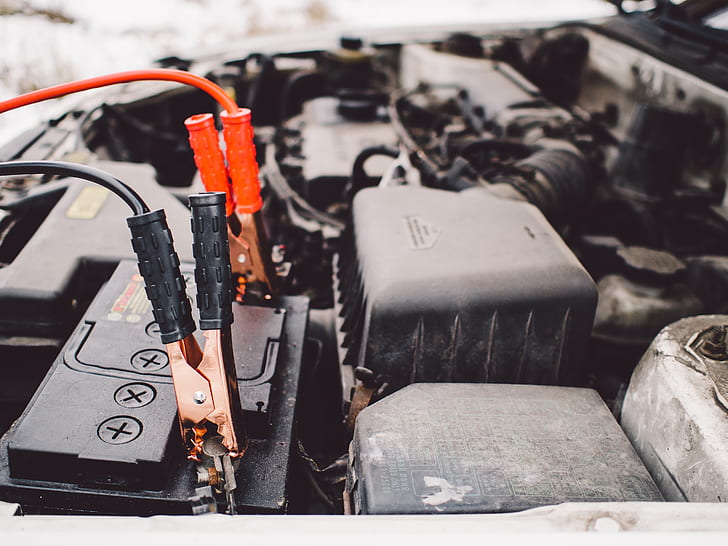
If you frequently find yourself needing to jump-start your car, it’s a clear indication that your car battery is nearing the end of its life. While jump-starting can provide a temporary solution to get your engine running, it is not a reliable long-term fix. It is highly recommended to replace your battery promptly to prevent unexpected breakdowns and potential harm to your vehicle’s electrical system. Take a timely action to replace the aging battery and ensure uninterrupted performance of your car.

4.Electrical Issues and Malfunctions:

When your car battery is dying, it can cause electrical problems in your vehicle. You might notice issues with the power windows, door locks or radio. Also, warning lights like the battery or check engine light may turn on. It’s important to take these electrical malfunctions seriously as they could indicate a failing car battery. Don’t ignore the signs and address the problem quickly to keep your car running smoothly.

5.Swollen Battery Case:

Inspecting the physical condition of your car battery is equally important. If you notice a swollen or bloated battery case, it indicates a potential internal problem. A bloated battery is usually caused by excessive heat or overcharging. Eco Power, a renowned car battery manufacturer in India, advises seeking professional assistance immediately to prevent further damage or potential hazards.
While concluding we can say that, recognizing the signs of a dying car battery is essential to prevent unexpected breakdowns and ensure the smooth functioning of your vehicle. Eco Power, a leading car battery manufacturer in India, urges car owners to pay attention to dimming lights, slow engine cranks, frequent jump-starts, electrical malfunctions or swollen battery cases. By identifying these signs early on and promptly replacing your battery, you can avoid inconvenience and maintain optimal performance on the road.

Addressing Solar Battery Challenges: Storage Capacity and Durability

As the world continues to shift towards renewable energy sources, solar power has emerged as a key player in the quest for a sustainable future. Solar batteries play a crucial role in harnessing the full potential of solar energy, enabling the storage and utilization of electricity even when the sun isn’t shining. 

However, like any evolving technology, solar batteries face certain challenges, particularly in the areas of storage capacity and durability. In this blog, we will delve into these challenges and explore how Eco Power, a leading battery manufacturer in India, is addressing them to revolutionize the solar energy storage landscape.

Storage Capacity

One of the primary challenges faced by solar battery manufacturers is optimizing storage capacity. The ability to store excess solar energy during the day for use during the night or cloudy days is vital to ensure uninterrupted power supply. Eco Power recognizes this need and has made significant strides in enhancing storage capacity through continuous research and development.

By leveraging advanced battery chemistries and innovative manufacturing techniques, Eco Power has been able to create solar batteries with increased energy density. This allows for more energy to be stored within a smaller physical footprint, thereby maximizing storage capacity. These advancements enable homeowners, businesses and communities to rely more extensively on solar power, reducing their dependence on conventional energy sources.

Durability

Another critical challenge for solar battery manufacturers lies in ensuring the durability and longevity of their products. Solar batteries are subject to rigorous charging and discharging cycles, extreme temperatures and other environmental factors, which can impact their performance over time. Eco Power understands the significance of durable solar batteries and has implemented robust measures to address this challenge.

Through detailed engineering and rigorous testing, Eco Power has developed solar batteries that are highly resilient. They are designed to withstand harsh weather conditions, temperature fluctuations, and voltage variations, ensuring optimal performance and longevity. By incorporating high-quality materials and implementing stringent quality control processes, Eco Power has established itself as a trusted brand in the market.

Collaboration with Battery Suppliers & Manufacturers.

To further enhance storage capacity and durability, Eco Power collaborates closely with battery suppliers and manufacturers. By leveraging our expertise and industry knowledge, we gain valuable insights into the latest advancements in battery technology. This collaboration enables us to incorporate cutting-edge battery chemistries and design methodologies into our solar battery solutions, further improving storage capacity and durability.

As one of the leading solar battery manufacturers in India, Eco Power also contributes to the industry’s growth by sharing our own expertise and experiences. By actively participating in industry conferences, seminars and workshops, Eco Power fosters collaboration and knowledge exchange, ultimately driving innovation and addressing common challenges collectively.

Conclusion

Solar batteries are instrumental in enabling the widespread adoption of solar energy, providing sustainable power solutions to homes, businesses and communities. However, challenges such as storage capacity and durability have been a focal point for solar battery manufacturers. Eco Power, as a prominent battery manufacturer in India, has risen to these challenges by investing in research, collaboration and advanced manufacturing techniques.

8 Tips for Inverter Battery Maintenance| Care of your Inverter Battery

Inverter batteries are an essential component of your emergency power supply system at home. Along with the inverter, the batteries help you get the backup when your electricity grid is at fault or the power supply is cut due to some other reason. It is important to buy a trusted inverter battery to get maximum backup and optimum performance without any hassles. 

Just buying the best battery won’t do!

These days many inverter battery manufacturers are developing batteries that are laden with latest features. The task is not over with buying the best battery, rather a good maintenance has to be carried out to ensure a long life of the batteries.

Let’s read on to know the tips to take care of the inverter batteries. These tips are to be followed for lead-acid  inverter batteries. Mostly the inverter batteries at homes are lead acid batteries and they require the following maintenance. Always handle the batteries carefully.Read and follow the instructions printed on the box and the manual. 

How to take care of your inverter battery?

1.They need ventilation:

Place the batteries in a well ventilated area so that the fumes and gases can escape out. Also ventilation helps to lower the temperature as compared to a congested place. The batteries get heated up during their working and a ventilated place with flow of air will help reduce the heat. This also prevents excess evaporation of the water from the battery as well thus less frequent water topping is required.

2.Check the water levels in the battery:

With a period of time the water inside the battery reduces due to the chemical reaction and the heat. The electrolyte solution inside the battery consists of a mixture of sulfuric acid and water. As the water level reduces the sulfuric acid becomes more concentrated. To prevent this water is added to maintain the concentration.

3.Tap water is a big no-no:

Never use tap water to refill or top-up the battery as they contain certain impurities which will hinder the reaction occurring inside the batteries and thus decreasing the performance of the  battery.

4.Clean battery is a happy battery:

Keep the battery surface clean and dust free by using dry cotton cloth.

5.The terminals should be rust free:

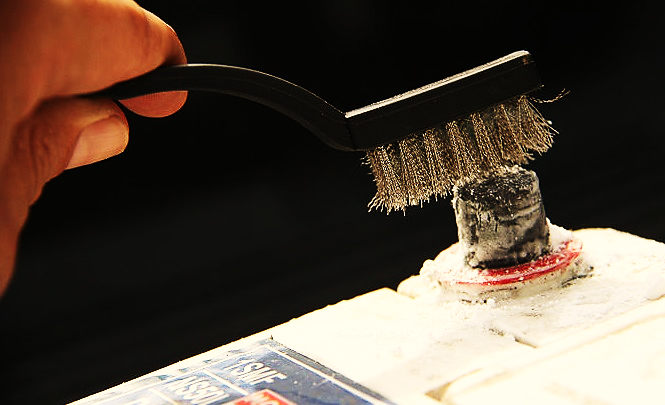
Rust free terminals ensure easy flow of electricity to and fro. Lead sulfate is produced at the junction, on the terminal which is a way of connection to the inverter. Lead sulfate increases the electrical resistance and thus hinders the flow of electricity between the inverter and battery. It affects the performance of the batteries in a negative way. Clean the terminals using nylon brush, warm water or with the right terminal cleaning solutions available. Always wear protective eyewear, rubber gloves and shoes to protect yourself while handling the battery.

6.Place the battery away from children and pets:

Batteries are dangerous as they contain sulfuric acid inside which is highly corrosive and they release toxic fumes as well. Keep the battery safe from children and pets to protect them. 

7.Inspect it regularly:

After you buy an inverter battery, just don’t leave it in any corner of your homes abandoned. Check them regularly and look out for any damage and leakage. If  you suspect anything then get them attended by an authorized mechanic. Do not try to handle a damaged battery, it can prove to be hazardous.

8.Check expiry date:

Keep a check on the expiry date of the inverter battery. Normally a battery would last up to 3-4 years depending on the company and  battery manufacturer. Replace old, expired or damaged battery at once. 

Hope these tips help you maintain your battery in its best health.

Looking to buy inverter batteries? Go for inverter batteries from Eco power, one of the reputed  inverter battery manufacturers in India. Visit their website at www.ecopowerbatteries.in to choose from their wide range.

6 Common Car Battery Problems Leading To Starter Issues

Car battery is the superhero that cranks up the engine and makes your car jump into action the moment the car keys are pushed in and turned. But what if your car doesn’t start at all, isn’t that a kind of annoying thing? Yes it is. You must have bought the car battery from the car battery manufacturer after so much research, still at times you can land in a situation when the car doesn’t start.

1.How does a car battery function

Car batteries are SLI batteries that are starting, lighting and igniting batteries. As the name implies they help the car to start. These batteries provide a huge amount of current in a short time to power up the car to bring it alive. 

The power is supplied to the car’s engine by the car battery then the car is powered with the alternator. Later on the car is charged with the help of the alternator.

Common battery problems

Now let us go through the common car battery problems that might be hampering the starting of the car. It could be due to our own mistakes or a manufacturing defect.

The following could be one of the reasons or a combination of reasons for starting issues of the car.

1.Corrosion of terminals 

It is one of the most common reasons for the car battery damage. Due to the corrosion happening at the terminals the performance will be hampered.

2.Separator failure

It separates the negative and positive plate and keeps them apart.The damage to the separator between the plates could lead to dysfunctioning.

3.Shed material

Due to long term usage or jolts and vibrations, the pasted material on the plates gets shed and this leads to decreased efficiency.

4.Breakage

There could be physical damage to the car battery from outside like on the container or inside on the plates. This happens due to vibration incurred on the adverse road conditions.

5.Low electrolyte level

Over time the electrolyte level gets depleted so it is always important to top it up with water. The electrolyte in the commonly used lead acid batteries is a solution of around 65% sulfuric acid and 35% water.

Prevention

If you travel a lot or use your car mostly on a daily basis it is a big disappointment when your car suddenly stops working or just becomes dead.

You can always take them to get replaced but as we all know prevention is better than cure hence show some care to your car battery by following these steps:

1.Check up:

Get your car checked frequently at an authorized car mechanic to remain updated about the car condition.

2.Battery tester

Use a battery tester to know about the car battery condition. Use the appropriate battery tester according to your battery. Normally the clips on the battery tester are attached to the battery terminals and then the tester gives the reading.

3.Find the right car battery

Always use the right battery for your car. This way you not only get improved efficiency but also it is better for the car’s health also. 

4.Check the expiry date

Check with the car battery to know about the expiry date. Replace them immediately when you see any damages to the car. 

I just wish your car battery never runs into any problem and is endowed with a long life but..but…everything has an expiry date. Sadly. But if you choose a powerful battery then you will have a longer lifespan compared to the other ones. For excellent performing car batteries choose them from Eco power, a leading car battery manufacturer in India that offer a load of high performance, efficiency and are pocket friendly as well. Check out their website at http://www.ecopowerbatteries.in/ for more information

Lead-acid automotive battery with advanced technologies- The best options for car owners

The best automotive battery manufacturer in India always ensures quality products for car owners. You know that battery technologies have undergone lots of transformation, as manufacturers use different chemistries. However, lead-acid batteries have not lost their importance in the automotive world. They store the electrical energy needed to add power to the electrical circuits of your vehicle.

While choosing lead-acid batteries for your car, you have to focus on two things- current and voltage. The standard voltage needs to be about 12.6V in the fully-charged condition. Lead-acid batteries used for automobiles produce voltage due to the metal plates immersed in a special solution. This solution contains sulphuric acid (35%) and water (65%).

The automotive battery manufacturer in India- Buy batteries for different vehicles

You can buy your automotive battery for golf cars and several other automobiles. The lead-acid battery for automobiles has a grid structure and contains a lead alloy. Due to the softness of pure lead, manufacturers use a small amount of metals to increase the strength. The presence of other metals also refines electrical properties. The commonly chosen additives are selenium, tin, calcium, and antimony.


Tin and antimony will ensure a proper deep cycling process. However, it can raise the water consumption level. Moreover, calcium minimizes the self-discharge level of your battery. In the modern lead-acid automotive batteries, you can find doping agents, like cadmium, selenium, and other elements to reduce the proportion of calcium and antimony.
Deep-cycle and starter batteries

While searching for lead-acid automotive batteries, you will get two options- the deep-cycle and starter battery. The starter battery helps in cranking the car’s engine, whereas the deep-cycle battery provides power consistently to your forklifts, wheelchairs, and golf cars. You may not find differences in design in these batteries. The peak power of the starter battery can be high. On the contrary, the power output level with the deep-cycle battery can be moderate, although it helps in the cycling process. The major differences are at the mechanical level.

The internal resistance level found in starter batteries is very low, and it is achievable by using some additional plates for the optimal surface area. Manufacturers apply the lead on the thin plates. However, plate thickness does not hold high importance due to the short discharge.

While buying starter batteries, you can find a marking- CCA. It shows how much current is delivered by the battery under low temperatures.

Deep-cycle batteries made of lead-acid have the optimal capacity with a higher cycle count. There is a use of thick lead plates for these batteries.  Although these lead-acid batteries are for cycling, you may find a risk of stress for full discharges. You can keep up moderate cycles by avoiding the full discharge. Charge your battery more frequently. You will notice Ah markings in deep-cycle batteries to indicate the level of current delivered by the battery.

Thus, lead-acid batteries for automobiles have complicated chemistry, and Indian manufacturers always try to provide the best output with their products.

Lorem ipsum dolor, sit amet consectetur adipisicing, elit. Voluptatibus, mollitia excepturi nihil, aperiam neque quaerat praesentium ipsum quis vitae provident! Odit dignissimos alias, maxime a dolor itaque velit tenetur vitae omnis sequi explicabo, unde numquam sint iusto veniam, nesciunt. Harum suscipit veniam, hic cupiditate illum itaque deleniti blanditiis sapiente voluptatum laudantium aperiam obcaecati ad. Consectetur libero ipsum, error repudiandae, consequuntur numquam unde minima, doloribus adipisci ab ad dolorum perspiciatis similique? Iusto quod praesentium ipsum eaque optio eligendi, aliquam ratione ea tempore officia odit! Cum illum non iusto molestiae rem laboriosam quis et officiis omnis nostrum nobis temporibus, voluptates, quisquam excepturi.